
SECRETS OF THE ROMAN ARMY
- James Cullen
- Sep 11, 2025
- 5 min read

One of the things that first got me interested in the Roman Army was the structure of it. I was amazed by how organised and efficient it was. Imagine thousands of soldiers, all trained to work together like a well-oiled machine, performing not only incredible feats of battle but also engineering, building and covering great distances on foot. It can seem like a thrououghly modern thing, except it was 2000 years ago. Today, I want to take you on a journey through the fascinating world of the Roman military structure, sharing some cool facts and stories that make the history come alive.
Understanding the Roman Military Structure
The Roman army was not just a group of soldiers; it was a distinctly organised and highly disciplined force. This is one of the reasons for its success over the armies of Rome's enemies. Most armed forces in the ancient world were no more than the male citizens of a nation called up and told to fight. The structure inherent in the Roman Army was designed to make sure every soldier knew their role and could work as part of a team. At the top, you had the Emperor, who was in charge of all of Rome's armies. But the very organised command structure meant that each unit knew its role. Generals commanded large armies comprising several Legions, individual Legions were commanded by a Legate. There were also officers such as Prefects, Tribunes and Centurions, to name but a few.
Each Legion in the Roman Army was made up of about 5,000 soldiers, divided into smaller units called Cohorts and Centuries. A Cohort had around 480 men, and this was divided into 6 Centuries, which was a unit of 80 soldiers led by a Centurion. This system allowed the army to be flexible and effective in battle. The soldiers trained hard, using equipment that was twice the weight of their actual sword and shield. They learned how to fight as units, build marching camps, and march long distances carrying all the equipment they would need. Individual endurance was the secret weapon of the Roman soldier.
What’s really interesting is how the Roman army combined different types of soldiers. The Legions were made up of Roman citizens who fought on foot as heavy infantry. But Rome also recruited non-citizen soldiers into the ranks of its army. These units were called Auxilia, and were often locally recruited troops who had a specialty combat role. Cavalry, Archers, Slingers, and even mixed units of lighter troops who could be used to cross difficult terrain, or scout behind enemy lines. This diverse mix of troops made the army strong and adaptable to different challenges.

The Role of Discipline and Training in the Roman Army
One thing that stands out about the Roman army is its strict discipline. Soldiers had to follow orders without question, and repercussions for disobeying orders were intense. One of the best stories to demonstrate this is that of Titus Manlius Imperiosus Torquatus, a Roman military commander very early on in their history in the fourth century BCE. Manlius gave an order that no soldier was to leave their post, because discipline had gotten loose. His son, also named Titus Manlius, left his post, and won a battle against some enemy soldiers. He brought the spoils of his victory to his father, who promptly had him executed for disobeying a military order. Is there any better example of the discipline of the Roman army than this?!
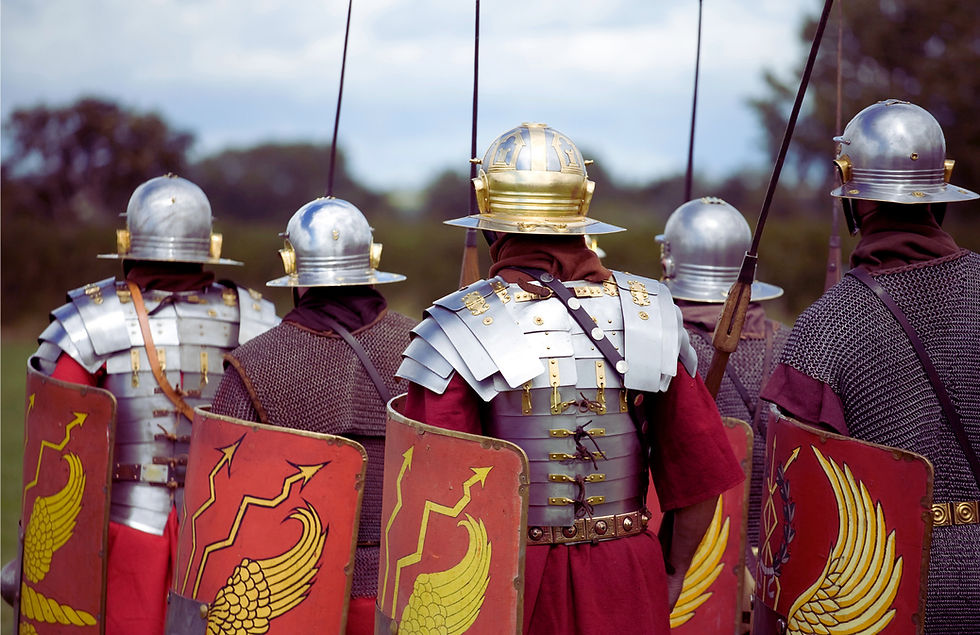
Training included learning how to use weapons like the Gladius (a short sword) and the Pilum (the long shafted javelin). Soldiers would throw their Pila in a massed volley at close range to break up an enemy formation, before closing and fighting with their short swords.
Roman soldiers also practised various formations, which were crucial in battle. The famous Testudo or “tortoise” formation, where soldiers would lock their shields together to form a protective shell, is a great example of their teamwork and discipline.
Discipline extended beyond the battlefield. Soldiers lived in camps with strict rules about cleanliness, order, and behaviour. This helped keep the army healthy and ready for action. It’s no wonder the Roman army was so successful for so many years.
How Long Did the Roman Army Last?
You might wonder, with all this power and organisation, how long did the Roman army actually last? Well, the Roman army was active for over a thousand years! It started around 753 BCE when Rome was founded and continued in various forms until the fall of the Western Roman Empire in 476CE.
During this time, the army evolved a lot. Early on, it was a militia; a body of mostly citizen-soldiers who fought when needed, and then returned to their regular jobs. Later, it became a professional force with soldiers serving for many years. The army’s ability to adapt to new enemies and changing tactics helped Rome expand its empire across Europe, North Africa, and the Middle East.
Even after the Western Empire fell, the Eastern Roman Empire, also known as the Byzantine Empire, kept the Roman military traditions alive for another thousand years until they finally fell in 1453. So, the legacy of the Roman army is truly impressive and long-lasting.
Fascinating Facts About the Roman Army
There are so many interesting tidbits about the Roman army that make it even more exciting to learn about. For example, there is a persistant myth that Roman soldiers were paid in salt sometimes, but in reality they were paid in money. There were various different pay scales depending on ranks in the army, and having different skills meant that you might be exempt from certain undesirable duties.
Another cool fact is that Roman soldiers built roads almost everywhere they went, and these roads were so well made that some are still used today. Building roads helped the army move quickly and kept the empire connected.
If you want to discover more amazing facts about the Roman army, there are plenty of resources that bring these stories to life, especially for young learners. It’s a great way to make history fun and interactive.
Bringing Roman History to Life in Schools
One of the best ways to understand the Roman army is by experiencing it hands-on. That’s why workshops like those offered by Kids Roman Army are so fantastic. It was actually a history workshop coming into my school that got me interested in Romans in the first place. These workshops let children step into the shoes of Roman soldiers, learning through active, outdoor activities that make history unforgettable.
Imagine kids marching like legionaries, trying on replica armour, or practising Roman battle formations. These experiences help bring the past to life far better than just reading from a textbook. Plus, being outdoors and active supports learning in a fun and healthy way. Click here to find out more about what we do.
For schools in the North West UK, this kind of immersive history workshop is a brilliant way to support the curriculum and inspire a love of learning. It’s all about putting children at the centre of the story and making history something they can touch, see, and feel. If you'd like to bring this history to your school, contact us now!
Exploring the secrets of the Roman army shows us how clever and organised the Romans were. From their military structure to their discipline and lasting influence, there’s so much to discover. Whether you’re a history buff or just curious, the story of the Roman army is full of adventure and lessons that still matter today. So, why not dive in and see what you can uncover? History is waiting!


Comments